(function() { var a=window;function c(b){this.t={};this.tick=function(b,i,d){d=void 0!=d?d:(new Date).getTime();this.t[b]=[d,i]};this.tick("start",null,b)}var f=new c;a.jstiming={Timer:c,load:f};try{var g=null;a.chrome&&a.chrome.csi&&(g=Math.floor(a.chrome.csi().pageT));null==g&&a.gtbExternal&&(g=a.gtbExternal.pageT());null==g&&a.external&&(g=a.external.pageT);g&&(a.jstiming.pt=g)}catch(h){};a.tickAboveFold=function(b){var e=0;if(b.offsetParent){do e+=b.offsetTop;while(b=b.offsetParent)}b=e;750>=b&&a.jstiming.load.tick("aft")};var j=!1;function k(){j||(j=!0,a.jstiming.load.tick("firstScrollTime"))}a.addEventListener?a.addEventListener("scroll",k,!1):a.attachEvent("onscroll",k); })();

Saturday, May 02, 2009


Kamal Nazer Yasin of Eurasia.net writes on 5/01/09:
"At a UN anti-racism conference, dubbed Durban II and held in Geneva, Ahmadinejad made a spectacle of himself by making what some diplomats characterized as a "hate speech." In his conference comments, Ahmadinejad alleged that Zionism "personifies racism," going on to accuse Western states of encouraging the establishment of a "totally racist government in occupied Palestine."

One must remember that Zionism has its roots in the occupation of Israel during the time of Moses and was characterized then by a strict command from God to purify the land pf Canaan killing all the inhabitants of the existing towns and villages and to dwell there "forever". At the same time the Law of Moses called for a strict observance of purification rites and the strict ordering of twelve tribes and the administration of worship and justice by the Levitical priesthood and families, the Kohanim. But, they blew it! And God kicked them out.

Traditions of separatism and violence are a deep part of the texture of the middle east and represent systems of honor and nobility for many of the nations. Jerusalem, which means the city of peace, represents established traditions of peace in the Middle East. That city was founded by a forbear of Abraham, "The Priest of Salem" who is also the ancestor of Ishmael.
The basic teaching is simple: to protect the widow and the fatherless, love thy neighbor, treat foreigner fairly, and maintain a spirit of hospitality. This was the way in the beginning and will endure until the very end.

Wednesday, December 17, 2008


Confiscation Vs. Freedom


When the average street dealer gets arrested for drugs
all his belongings immediately get confiscated;
his car, his boat and his Rolex watches.
They figure he bought this with the money gained
through the sale of drugs

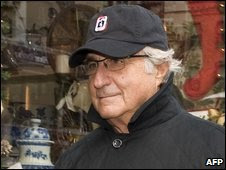
Nobody questions Madoff 's belongings.
He is free on ten million dollars bail
paid with the money he gained by fucking his rich friends.

Gotta laugh at the politics involved here.

Monday, December 15, 2008


"A Goodbye Kiss": Threw His Shoes at The President of the United States of America!

As he flung the shoes, Mr Zaidi shouted: "This is a goodbye kiss from the Iraqi people, dog."

A hero through his shoes! "In terms of the agreement this is a major achievement," spoke an unruffled President Bush knowing how important freedom of expression is in a free society. Espousing the ideals of social freedom, President Bush supported the act as an indication that freedom was beginning in Iraq. Although he will be view in history with great perplexity on a number of fronts, especially economic, he will forever be associated with this heroic act on the part of many of the Iraqi people.


The Iraqi government called on his employers to apologize for the act, apparently planned for months. Then, the Al-Baghdadia news agency responded with a statement demanding al-Zaidi's release "in line with the democracy and freedom of expression that the American authorities promised the Iraqi people."

They still have to learn that freedom of expression means non-violent expression.

According to unconfirmed newspaper reports, the former coach of the Iraqi national football team, Adnan Hamad, has offered $100,000 (£65,000) for the shoes, while a Saudi citizen has apparently offered $10m (£6.5m).


Long live the widows and orphans of Iraq and the indignity that all righteous persons must show toward those who bring death and destruction into the lives of innocent people. So begins the historical demise of the Bush regime.

Friday, December 12, 2008


Daley Obama Blagojevich -"Politics = Who Owes What to Whom"
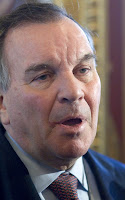


"The most important thing to criticize about Obama's career is invisible, because the media doesn't talk about it. By that I mean the growing debt Obama owes to the very worst element in Illinois politics, Mayor Richard Daley's political machine." Read: Obama's corrupt Illinois alliance

Sunday, November 30, 2008


Abusive Self Interest: Tyranny


Secrecy has nothing to do with the national security and everything to do with private interests and those who lie, steal, cheat, murder, rape, pillage the public by using executive privilege.

Aristotle and every major political philosopher since has warned against secrecy in office. It indicates the presence of abusive self interest which is tyranny.

The president is required to turn over his records upon leaving office for the public record but Obama intends to assist Bush and Cheney in continuing their secrecy.

The president-elect’s Web site promises he will reverse Executive Order 13233, nullifying the timely, lawful release of presidential records.

For more on this go to: http://www.truthdig.com/report/item/20081129_bushs_11th_hour_bid_for_secrecy/

Sunday, November 23, 2008


Bush-Cheney-Rice ... Obama-Biden-Clinton

I believe that strong leadership requests information, makes decisive decisions and bears the responsibility. The level of knowledge required to be decisive in the office of the President of the United States was much greater than the present administration possessed and its lack of wisdom crippled the financial system of this nation; something the people trusted it was well poised to strengthen. What system can Obama enhance with popular words, high ideals, charismatic speeches, and a plentiful lack of hard earned leadership and experience while Biden and Clinton are calling the shots? This looks like a repeat performance.

Saturday, October 04, 2008


Socialist “Bailout” Could Spark Collapse By Cliff Kincaid

AIM Column | September 29, 2008

Many commentators, Schiff said, are telling people that if the bailout doesn’t go forward, there will be an economic crisis.

While many of the talking heads and pundits on TV have been providing calming words of reassurance about proposed federal intervention in the financial system, analyst Peter Schiff of Euro Pacific Capital has been accurately warning for years about a financial meltdown and says that the worst, if Congress eventually passes the “bailout” bill, is yet to come.

Asked for comment on current media coverage of the financial meltdown, he told Accuracy in Media, “Absent when they have me on, it’s pretty bad.”

Many commentators, Schiff said, are telling people that if the bailout doesn’t go forward, there will be an economic crisis. However, “if we do it, there will be a bigger crisis,” he predicts.

“The politicians want to make believe we can avoid paying the piper if we pass these bailouts,” he said. “It’s just not true. It’s going to collapse the currency. It’s going to make a worse economic crisis because the money they’re printing is not going to buy anything.”

While he continues to make a number of media appearances, he says that the CNBC cable network won’t have him on the air. “I predicted all this stuff, and they laughed at me,” he said. “So maybe they’re embarrassed.”

Schiff, who labels the proposed government takeover of the financial sector as socialism and refers to the Federal Reserve Board chairman as “Comrade Bernanke,” told AIM, “The government doesn’t have the authority to do any of this stuff. This whole bailout bill is illegal. They don’t have the authority to buy up mortgages. Nothing in the Constitution says they can do this.”

“Who needs Bolsheviks when you have the Fed?” he has written.

The author of “Crash Proof: How to Profit from the Coming Economic Collapse,” Schiff said that “The government doesn’t solve problems. It makes them bigger. So if we’re broke, which is the reality―that’s why these mortgages are not worth much because Americans can’t afford to pay the money back that they borrowed―the bottom line is we’ve borrowed and spent ourselves into bankruptcy following the government’s advice. They’re the ones that encouraged all this reckless borrowing and spending.”

Interviewed by AIM before the House of Representatives on Monday afternoon voted down the “bailout” scheme, at a time when it looked like the plan would actually pass, Schiff had shocking advice for ordinary Americans.

“The first thing you do if you have a mortgage is you stop making the payments,” he said. “That’s the number one thing for people who have mortgages based on this plan. And use that money to buy gold or stock up on food. You’re going to need it. Meanwhile, no one is going to kick you out of your house. You’re going to be able to live in your house for probably a year or two before the government calls you up to give you a lower mortgage because nobody is going to foreclose on you right now. Why would you foreclose? You sell the loan to the government. This plan is a huge moral hazard and it’s going to lead to a surge in mortgage delinquencies.”

While media reports and opinion polls demonstrated that the overwhelming majority of Americans were opposed to a socialist takeover of a major sector of the U.S. economy, many voices in the media were urging passage of the takeover plan. (Read on)

Sunday, May 18, 2008


Three robbers burnt alive in Karachi by Raza Hussain

May 15, 2008


In a shocking incident of vigilante justice, a mob in Karachi on Wednesday burnt three bandits alive near the Timber Market, venting their anger and disgust over the rising crimes.

The gory incident took place when four robbers barged into Akbar Soomro’s apartment on the third floor in the Somiya Mukarram Palace, situated near the Timber Market. The robbers barged into his house at around 1:30 pm and held the children hostage at gunpoint. They cut the telephone line and electricity wires and locked the house from inside and started misbehaving with the women.

The bandits looted cash and jewellery. When they were about to flee, the door bell rang. When the bandits opened the door, they found Akbar, the head of the family. They shot and injured him and started fleeing.

Akbar, a seaman by profession, chased the bandits and made a hue and cry. The passers-by and residents of the area caught the three bandits and started beating them, while the fourth escaped. They immediately shifted Akbar to a hospital where he was declared out of danger.

In the meantime, 800 to 1,000 people gathered (more)


On Oil, Politics, and Hating Me Because I Tell the Truth by David Brant

This is and awesome article by David Brant that may be found on Ground Report, I would highly recommend reading his material. Right on, David!
With oil prices flowing relentlessly upward--at least for the time being--and gasoline prices naturally, inevitably following suit, it should be clear to all educated adults, reglardless of whehter or not they are economists or day-traders, why these prices are going up.

We are all taught in school, well before our college-age years, of the law of supply and demand. Assuming that demand remains constant, when supply goes down, prices go up; when supply goes up, prices go down.

With two very, very heavily populated nations called China and India increasing their demand for energy and, hence, oil at a ruthlessly fast rate as they move their societies into the prosperous capitalistic model of doing business and become technologically savvy, oil supplies and the prospecting for places from which to get new supplies are having great amounts of stress placed on them. This stress on those resources is unprecedented on a global scale (as is the amount of wealth being created and enjoyed on a global scale).

This stress is predominantly what is driving up oil prices, and hence driving up gasoline prices. There are some other factors, too--the weakened U.S. Dollar (all oil the world over is priced in Dollars), the fact that most of the world's oil supply is owned and controlled by governments and cartels instead of private enterprise (which makes for less responsiveness to market forces), the hypersensitive oil futures traders on the floor of the New York Mercantile Exchange all play their role in driving up oil prices. Prices at the gas pump are further driven up in the United States by state and federal taxation--as a matter of fact, the governments make significantly more money per gallon of gasoline than ExxonMobil or Chevron or any of their ilk do.

But, mainly, it's suppy and demand. Indeed, the cartel factor and the futures-traders factor are affected by the same supply and demand, at least to an extent.

Meanwhile, the oil companies themselves are only enjoying the smallest profit margins on each ever-more-expensive barrel of oil sold. They are enjoying the MSM's beloved bete noire record-high profits only because volume of sales are up to record-highs, in the same way that a Target or a Wal-Mart rakes in the dough even while selling the same merchandise for less than others do.

But none of this is good enough for the ranters and ravers on the Left or their puppet messiahs in the MSM. Why not? Because people are angry at sharply rising gasoline prices (which could have been greatly mitigated if the U.S. Congress had permitted appropriate action to be taken years ago) and, in the great drama of day to day existence, people need something to react to emotionally. What this means for most of them is that they need to be able to point the finger of blame at someone.

And who else to point it at but the wicked, vile oil companies? After all--they're making money while we're losing money! (If these same ranters and ravers would shut up and learn how to invest their money more wisely, they, too, would be making money if they held any number of different oil and gas stocks.)

The reason why people either ignore the law of supply and demand or fail to point their cursing finger of blame at the one right entitity that deserves a goodly share of it--the federal government--is because the media messiahs that play on their fears are working for the aforementioned federal government and it is their j-o-b to aid and abet the federal government in pointing its authoritarian finger back at the wicked, vile Big Oil businesses.

Now, all of this is played out with intense drama in the media, and the resultant hero vs. fire-breathing dragon tale is so mesmerizing to the vast majority of people that they just find it much more entertaining than the very dry and unemotional tale of some law of supply and demand.

Can't they just repeal that tiresome law, anyway?

At any rate, just as exciting is when the wicked, vile Big Oil heads have to show up before Congress to be shaken down again, and the blame-passing fingers of Congressmen become the scolding, wagging fingers that vow to force those snakes to give the people what they deserve!

That is why a true slithering snake like Barry H. Obama gets people to swoon and cheer when he goes into his overly studied southern Baptist preacher's drawl and raises his hand high in righteousness and declares that yes, he will make the oil companies pay their fair share (as if they don't already pay more in taxes each year than most Americans dare to dream of earning in their lifetime)! It's not because he's righteous nor because he is appealing to facts or truth.

It's because he's a pop star.

Pop stars, even the ones who have talent, do not make great music. They just hit their fans and listeners in a soft place: their unexamined emotions.

This is what politicians do, and those who do it better are those that get the vote. Votes that keep the power in their hands are what matter most to them; not truth.

Barry H. Obama and all those in the Congress who keep doing the shake-down on Big Oil don't want to tell you that all increased costs to corporations just re-appear as higher prices for consumers. Every time politicians raise taxes on business, it is the private consumer who foots the bill. The politicians don't care, however, because their j-o-b is to fill their coffers. More money, more power.

Make people think they're thinking, and they will love you. Make people really think, and they will hate you.

If you, dear reader, talk the law of supply and demand in the same breath as oil and gasoline prices, be prepared to be laughed at, ridiculed, ignored, and yes, hated.

But at least you'll know you're telling the truth. And a few others will, too.

For shame those few others aren't our leaders.

Tuesday, January 08, 2008


Iranian Speedboats in Gulf of Hormuz

Mr. Bush said:


"I don't know what their thinking was, but I'm telling you what I think it was, I think it was a provocative act."

The US president was speaking in the White House Rose Garden on the first anniversary of the Iraq troop surge, hours before leaving for a week-long Middle East trip.

i don't know
what their thinking was

this is a common loaded rhetorical statement which communicates disinterest in the other person or party ... it shows a closed mind and a hardened spirit

but I'm telling you what I think it was
I think it was a provocative act

with this our president has stated to the world
what he wishes to think and believe
and what he wishes us to think and believe

in other words
get ready for war
echoes of the bay of tonkin

also:

What is this Iran provocation BS?
Source: CounterPunch
Author: David Lindorff
Posted on 01.08.08 by Mary Lou Seymour

“Not one news story about this week’s latest chapter in the administration’s ongoing effort to gin up a crazy war with Iran–the so-called ‘provocation’ caused by Iranian naval speedboats approaching within 200 meters of a US destroyer–mentioned that the US, which sits some 7500 miles away from Iran, has sent a whole fully-armed armada into the Persian Gulf just off Iran’s coast. Or that the Vice President actually flew out to an aircraft carrier that was part of that US armada, and threatened, from the flight deck, to have the US massively attack Iran. Just who is provoking whom where?” (01/08/08)

Saturday, December 29, 2007


In Memory of Benazir Bhutto Cut U.S. Ties to Musharraf By Medea Benjamin


The following is an excerpt from Information Clearinghouse:

"Bhutto's assassination is a blow to people all over Pakistan, and the world, who hold life sacred and believe in the basics precepts of democracy. It is also a blow to women worldwide who took strength from seeing such a courageous, articulate and charismatic woman playing a leadership role in a powerful Muslim country. Inside Pakistan, even her most bitter critics wept at the news of her death, understanding that it is indeed a dark day when assassination becomes a tool for eliminating opposing viewpoint"

There is much speculation about who committed this odious act. It could certainly be religious militants opposed to a leader like Bhutto who repeatedly expressed her determination to combat violent extremists. Bhutto was perceived by many Pakistanis as too "pro-Western," especially after remarks that if elected Prime Minister, she might allow U.S. military strikes inside Pakistan to eliminate al-Qaeda. " ( ... Read on)

Tuesday, December 04, 2007


Why Does Iran Need Nuclear Power

Figure it out!

Iran has that largest available army in the world according ... and virtually nothing else.


11,770,000

7,024,000

5,995,000

5,209,000

3,773,300

3,037,000

2,369,239

1,965,000

1,687,600

1,449,000

1,109,000

1,043,550

923,000

683,150

576,000

Visit: to Global Fire Power dot com.

Monday, July 02, 2007


THE EU: FIRST IN POSITION; FIRST IN PREEMINENCE

By Debra Rae

February 5, 2006

NewsWithViews.com

By definition, globalism is an interdependent, one-world state that undermines Western traditionalism inclusive of the US Constitution, free enterprise, Judeo-Christian ethic, and the traditional family—all of which, over time, are exchanged for so-called enlightened collaborative consciousness in the name of “collective security.”

Curious, isn’t it, that the National Chairman of the Communist Party USA, Gus Hall once made this startling admission: “The battle [to save America] will be lost, not when freedom of speech is finally taken away.” Instead, Hall continued, America will be lost “when her citizens become so adjusted or conditioned to getting along with the group that, when they finally see the threat, they say, ‘I can’t afford to be controversial.’” That is to say, they concede to a common cosmic consciousness, pledging allegiance, not to the United States of America, but rather to the world community. This, my friend, is collectivism, and it is by no means America-friendly.

In The Secret Destiny of America, Freemason authority Manley P. Hall revealed that “secret societies have worked for centuries to create such an enlightened democracy,” a Novus Ordo Seclorum (Latin for “godless secular world order of the ages”). The UN Report on Human Development maintains that “mankind’s problems can no longer be solved by national governments.” According to this 1994 report, “what is needed is world government.” Toward realizing the goal of an enlightened global democracy, Winston Churchill (1947) singled out an united Europe as “the urgent and indispensable step.” Nurtured at Bilderberg Group meetings, today’s European Union serves as prime archetype of a rapidly maturing, allegedly illumined, would-be worldwide social democracy.

Rhodes Scholar Strobe Talbott (CFR) believes “a politically united Europe will advance our common goal to terminate nationhood as we know it and replace it with a single authority.” With this in view, international power-elitists have purposed first to regionalize Europe, then the world, in a forcible race to global governance. For good reason, I liken global governance to a giant undersea octopus with eight gangly arms twisted resolutely around the neck of nationhood. Once national sovereignty is effectively compromised, a bio-regionally-defined, representative trans-federal government can and will emerge

Globalization speaks to redistribution of the world’s wealth. Sounds magnanimous, but wait. The agenda is to concentrate that wealth (therefore, power) in the hands of a few who manage the masses by means of international law. Just who makes up this oligarchy? Ask Harvard-trained Professor Carol Quigley (Bill Clinton’s mentor). It was he who unveiled and affirmed existence of a permanent shadow government consisting of powerful bankers, businessmen, and government officials who together control our political life from behind the scenes. Purportedly paving the way for world peace, those recommended for special training in internationalism by being awarded Rhodes Scholarships are persuaded that exceptional talents and aptitude guarantee their right to rule over less gifted masses. After all, the latter are judged to be unaware of what is good for them.

In 1933, FDR wrote Colonel Edward M. House that “a financial element in the larger centers has owned the government ever since the days of Andrew Jackson.” More recently, on the other side of the pond, Margaret Thatcher pinpointed the long-term goal of international policy makers as these. It is to establish the United Nations as a kind of embryo world government. Convening at the highest levels, and poised at the center of the New World Order, the UN already represents a limited form of world government. Offering an exhaustive framework for global governance, more than 500 multinational treaties have been deposited with the UN.

In September 2000 internationalists worked over the Charter for Global Democracy to restructure the UN from a debating society into a sovereign entity. Not surprisingly, UN Secretary-general Kofi Annan dubs the UN “the ultimate power.” His career goal is to be promoted to global Prime Minister over an assembly of the people made up of moneyed non-governmental organizations.

In Bolshevism and World Peace (1918), Russian Communist Leon Trotsky described “the task of the proletariat”—that being, “ to create an UN of Europe as foundation for the US of the World.” Accordingly, attempts were made in Prague (March 2004) to enlarge the pan-European vision by creating, under a single banner, a true continental political unification.

The EU is first in position, as prelude to full-blown globalism; similarly, it is first in preeminence. The Lisbon Strategy (2000) looks to the ensuing decade to render it the most competitive and dynamic knowledge-based economy in the world. Creation of the European Monetary Union, the Euro serves as common currency for participating member-states and represents about 1/5 of the world’s economic output and trade. What is happening today in the European Community almost guarantees the economic dominance of Western Europe in the burgeoning New World Order.

Founded in 1968, the Club of Rome is responsible for today’s United Europe. Its 1972 report, the Limits of Growth, served as a blueprint for this gutsy new political, economic, and military union. Already the Club of Rome has divided the world into ten political-economic regions referred to as “kingdoms.” Adopted by twenty-five countries at the second session of the World Constituent Assembly, the 1977 Constitution for the Federation of Earth proposes an administrative structure of twenty world electoral and administrative regions with ten mega-regions.

In February 2004, small, informed discussions and networking at Witton Park Meetings in England looked to expanding the European security force and its relationship to the US, NATO, and the UN. Be assured the US/EU partnership for the 21st century is amply motivated and propelled by the world’s largest two-way trade and investment relationship, accounting for more than a trillion dollars.

The global octopus may well be deemed harmless, but beware. Henry Lamb (publisher, Eco-Logic) warns that an “interdependent, one-world state under global leadership will result in the US taking on the lowest common denominator that forced equity demands.” This being the case, the divinely inspired and unique political perspective of what Trinity Law Professor James Hirsen identifies as “the grand experiment we call America” is imperiled by its suffocating grip.

© 2006 Debra Rae - All Rights Reserved

Sign Up For Free E-Mail Alerts

E-Mails are used strictly for NWVs alerts, not for sale


Daughter of an Army Colonel, Debra graduated with distinction from the University of Iowa. She then completed a Master of Education degree from the University of Washington. These were followed by Bachelor of Theology and Master of Ministries degrees-both from Pacific School of Theology.

While a teacher in Kuwait, Debra undertook a three-month journey from the Persian Gulf to London by means of VW "bug"! One summer, she tutored the daughter of Kuwait's Head of Parliament while serving as superintendent of Kuwait's first Vacation Bible School.

Having authored the ABCs of Globalism and ABCs of Cultural -Isms, Debra speaks to Christian and secular groups alike. Her radio spots air globally. Presently, Debra co-hosts WOMANTalk radio with Sharon Hughes and Friends, and she contributes monthly commentaries to Changing Worldviews and NewsWithViews.com.

Together, Debra and her husband traveled throughout Africa, Asia, East- and West- Europe, North- and South- Americas--once on the British Concorde. Now widowed, Debra calls the Pacific Northwest home.

Web Site: www.debraraebooks.com

E-Mail: ABCs@debraraebooks.com


BILDERBERG 2007 REPORT


ELITE MEET BEHIND STIFF SECURITY

Secret Cabal Roosts at Ritz-Carlton; Riot Police Keep All But Invited Out

rss202

BILDERBERG 2007 REPORT

AFP’s Jim Tucker is back in the United States after discovering Bilderberg right in the middle of Istanbul, and not at the Klassis Country Club, 40 miles outside Istanbul as he first believed. What follows is Jim’s first on-the-spot report, filed before leaving Istanbul.

By James P. Tucker Jr.

ISTANBUL, Turkey—Bilderberg celebrated President Bush’s “surrender” on two major issues while showing distress over continuing setbacks to its goal of establishing a world government under the United Nations.

Bush’s surrender came on two fronts: The environment and the sovereignty-surrendering Law of the Sea Treaty (LOST). As recently as May 25, Bush administration officials reiterated his long-standing opposition to European demands on the environment, especially the Kyoto Treaty, which would impose heavy economic burdens on the United States while exempting Mexico and other smoke-belching nations. His reversal on LOST is now under the radar of the mainstream media but will eventually have to emerge.

Bilderberg was among the first to discover the environment as an issue years ago. But these sons of smokestack millionaires were motivated by the potential for immense profits in cleaning up the environment, not by foul air and dirty water. Thus Bilderberg’s pressure on the European Union to require heavy taxpayer investments for clean-up and former President Bill Clinton, himself a Bilderberger, to advocate ratification of the Kyoto Treaty.
But in Washington on May 31, even as Bilderberg luminaries were arriving at the posh Ritz-Carlton for their annual secret meeting, Bush called for 15 major nations to agree on a goal for global emissions limits by the end of next year.

“The United States takes this seriously,” Bush said.

But while gloating over this “surrender,” Bilderberg members denounced his efforts as “too little and too late” because the Kyoto Treaty expires in 2012. The Europeans agreed that more must be demanded at the Group of 8 summit now taking place, but Bush must not be “embarrassed.” The new environmental buzzword is to be “sustainable growth.”
(more)


Information of Author and Group from Wikipedia:


James P. (Jim or Big Jim) Tucker, Jr. is a journalist who, since the 1970s, has focused on exposing the controversial Bilderberg Group.

The Bilderberg Group or Bilderberg conference is an unofficial annual invitation-only conference of around 130 guests, most of whom are persons of influence in the fields of business, media, and politics.

The elite group meets annually at exclusive, four or five-star resorts throughout the world, normally in Europe, once every four years in the United States or Canada. It has an office in Leiden, South Holland, Netherlands. They met at the Ritz-Carlton Hotel in Istanbul, Turkey[citation needed] for the June, 2007 meeting.

Contents

[hide]

Thursday, May 10, 2007


Argument Without End —Robert S. McNamara - Review


Spotlight Reviews

January 4, 2000
Reviewer: miketol@mtco.com (Eureka, IL United States)

When In Retrospect first came out, some of the people at the college where I teach came up to me and said: "Did you hear? McNamara's published a book and he says the Vietnam War was all a mistake!" Whoa - talk about your late-breaking news! Still, I suppose hearing those sentiments from the highest levels imparts a certain power to them that us lowly grunts could never hope to possess - but I think I recall saying "this is a big mistake" on my first patrol (I served in 'Nam in '68-'69).

The rub, of course, comes when we try to figure out WHY it was a mistake, and it is here that McNamara can give us something truly significant. Does he? I think that he does, but what he has to give us has been dished up many times before.

Apparently realizing that he hadn't provided those answers the war requires in In Retrospect, McNamara instituted a series of conferences between policy makers active during the "McNamara Years", from the U.S. and North Vietnam McNamara's stated goal is to search for "lost opportunities. Were there ways to avoid U.S. entanglement; or, having become entangled, were there ways for the U.S. to disengage before so many lives were lost? McNamara's idea here is to find those lost opportunities and lay them before the public.

So, it was with excitement that I read this book - maybe, finally, McNamara will come clean. And come clean he does, though not in the way he expects.

I knew I would have a different reaction to this book when I read how shocked McNamara was to learn the North Vietnamese side of the argument wanted to start in 1945 in the search for missed opportunities. McNamara's original intent was to limit discussion to the years 1961 - 1967; his years as Secretary of Defense. Here we have a sense of the man's over-arching ego; nothing important could have occurred before or after those dates. It is simply beyond my comprehension how the so-called "best and brightest" could be surprised at the date of 1945. For those of you who don't know, that's the date when the Vietnamese, under Ho Chi Minh, declared themselves independent of France, using words from the U.S. Declaration of Independence and the French Declaration on the Rights of Man. That is the date that Baodai, the last emperor of Vietnam, formally abdicated his throne and anointed Ho Chi Minh as his successor. That is the date when Ho Chi Minh made direct appeals to Pres. Truman to ensure the rights of the Vietnamese were respected. It is a date that is no secret now, and wasn't then.

How, then, could the chief architect of American policy towards Vietnam be so awesomely ignorant of such an important starting point? The answer to that question is one of the lessons one might draw from the war: U.S. policy makers had no interest in Vietnam per se. It was merely a stage, upon which the righteous Americans would meet and defeat the forces of "the Evil Empire". The McNamaras and the Rusks and the Rostows felt no need to learn anything about their potential adversary - to our ultimate sorrow. Know Thy Enemy. That lesson is nothing new; applied to this specific war, one can find it in Fire in the Lake, Frances FitzGerald's excellent work about the war published in 1971. What is new is McNamara's bald admission that he really had no interest in learning about the Vietnamese, nor did anyone else in the American administrations.

Another interesting part of the book is McNamara's complete lack of understanding at the refusal of the North Vietnamese to negotiate while we were bombing them. Despite the numerous lessons about the failure of strategic bombing to shorten wars and "force" the enemy to the negotiating table, America pursued the continued bombing of North Vietnam in order to accomplish those self-same goals. All of this was known to McNamara and his cronies, and yet they allowed the strategic bombing of North Vietnam to be one of the major foci of American policy. And now, thirty years after McNamara's involvement in the war, he still doesn't get it.

I wish to touch on just one more facet of Argument Without End. It includes a chapter by Col. Herbert Schandler and McNamara, entitled "U.S. Military Victory in Vietnam: A Dangerous Illusion?" Most of the chapter was written by Schandler, who did his time in 'Nam in the infantry. The answer to the rhetorical question posed in the title is, Yes - a U.S. military victory in Vietnam is and was a dangerous illusion. I strongly agree with that answer, and I'm glad this chapter is in the book. But, dollars to doughnuts, this chapter won't shut up those deluded folks who think "we could've won if only the military had been allowed to win". This is because Schandler never really answers those critics who contend that the military had its hands tied in Vietnam. This is too bad, because the answer is not all that difficult to comprehend. If the military had done exactly as it pleased in Vietnam, we still would have lost. Without the support of the people we were supposed to help, there was no hope. Herein lies another lesson from the war: if we aren't true to our democratic principles in our foreign policy, our foreign policy will fail. We pontificate at great length about "self-determination", but we sure didn't allow it in Vietnam.

In the end, these two books show Robert Strange McNamara to be not very bright - certainly not the best. They show a man steeped in his own arrogance, and that arrogance in him and those around him cost thousands of American lives and millions of Vietnamese lives. But give the man credit, he doesn't flinch from laying it all before us - even if he doesn't complete understand exactly what it is he's telling us.


Sunday, May 06, 2007


political wisdom


take a good look at your own foundation
your feet
one is always on the right
and the other is always going to be on the left
but your ass
which you keep covered up
is always in the middle


Let History Judge By Scott Ritter

25 January, 2006 Alternet

Scott Ritter served as a Chief UN Weapons Inspector in Iraq from 1991 until his resignation in 1998. He is the author of, most recently, Iraq Confidential: The Untold Story of the Intelligence Conspiracy to Undermine the UN and Overthrow Saddam Hussein (Nation Books, 2005).


Stung by growing criticism of his Iraq policy which has manifested itself in all-time low public opinion ratings, President Bush last month embarked on a tour in which he delivered five speeches outlining his "Plan for Victory" in Iraq, as well as offering a defense of his decision to invade Iraq. "It is true that much of the intelligence [used to justify the invasion] turned out to be wrong", Mr. Bush said in the fourth of these speeches. "As President, I'm responsible for the decision to go into Iraq."

While taking responsibility for his actions, Mr. Bush has not taken well to any criticism of his role in over-selling the case for war, and in his speech was quick to attack those who dared hold him to account. "Some of the most irresponsible comments about manipulating intelligence", he said, "have come from politicians who saw the same intelligence we saw, and then voted to authorize the use of force against Saddam Hussein. These charges are pure politics."

But it is the President, through his speeches, who is engaged in politics of the most puerile sort. Mr. Bush failed to address his role in the Niger yellowcake forgery, the aluminum tube exaggeration, the rush to embrace "Curveball", or any of the myriad of politicized intelligence pushed by the White House in the lead up to war with Iraq. The President continued to exploit in the basest fashion the death of nearly 3,000 people on September 11, 2001. As has been his style since that horrible day, Mr. Bush hid behind the memory of so many fallen to mask his administration's shortcomings and disguise its true intent.

"Given Saddam's history", the President said (conveniently omitting that the CIA today states that Iraq had destroyed all of its WMD by the summer of 1991), "and the lessons of September the 11th, my decision to remove Saddam Hussein was the right decision. Saddam was a threat -- and the American people and the world is better off because he is no longer in power." But even the CIA's National Intelligence Estimate of October 2002, used by the Bush administration to sell its Iraq war to the US Congress, failed to identify Saddam Hussein as a threat.

The White House pushed hard to find intelligence information that backed the assertions made by President Bush in the fall of 2002 that Hussein's regime was an "ally of al-Qaeda" and posed a direct terrorist threat to America. "This is a man that we know has had connections with al-Qaeda," he said, referring to Saddam Hussein. "This is a man who would like to use al-Qaeda as a forward army. And this is a man that we must deal with for the sake of peace."

But neither the FBI nor the CIA were able to produce any intelligence to back up the President's rhetoric. Indeed, both agencies provided assessments that directly contradicted the claims of Mr. Bush, noting that any alliance between Saddam Hussein and Osama Bin Laden was highly unlikely. These findings were included in the October 2002 National Intelligence Estimate, a classified document kept secret from the American public and most members of Congress. However, in a declassified version of the NIE made public, all mention of the de-linking of Saddam Hussein and Al Qaeda were excised, freeing up the President and his administration to sell the Iraqi war on the basis of not only the existence of WMD in Iraq, but also the probability that Saddam Hussein would transfer these weapons to his ally, Osama Bin Laden, who "on any given day" could unleash hell on American soil.

"And when the history of these days is written", the President said, concluding the fourth and last of his Iraqi policy speeches, "it will tell how America once again defended its own freedom by using liberty to transform nations from bitter foes to strong allies. And history will say that this generation, like generations before, laid the foundation of peace for generations to come."

History will tell another tale. Far from the revisionist and heavily redacted version of events offered up by President Bush, historians will write of an America which squandered the good will of the world in the aftermath of September 11, 2001, to instead push aggressively for a policy of pre-emption and hegemony. In a speech made before the graduating class of the United States Military Academy at West Point in 2002, the President told the future officers of the US Army (many of whom have gone on to fight and, tragically for some, die in Iraq) that, "Our security will require all Americans to be forward-looking and resolute, to be ready for preemptive action when necessary to defend our liberty and to defend our lives." He went on to say that "America has, and intends to keep, military strengths beyond challenge."

These twin policies of hegemony and pre-emption went on to be codified in the National Security Strategy of the United States, published by the White House in September 2002. The 33-page document outlined a new and muscular American posture in the world -- a posture that relied on preemption to deal with rogue states and terrorists harboring weapons of mass destruction. It stated that the United States would never allow its military supremacy to be challenged as it was during the Cold War, noting that when America's vital interests are at stake, it will act alone, if necessary.

President Bush has tried to justify his embrace of hegemony and pre-emption as a tragic necessity in the aftermath of the attacks of September 11, 2001. But the facts do not add up. The triple-threat outlined by the Bush administration as the justification for this new policy -- Saddam Hussein's WMD, the Hussein-Osama Bin Laden alliance, and the transfer of WMD technology from Iraq to Al Qaeda for the purpose of attacking America -- could not be backed up either in the form of intelligence data or intelligence analysis. The fact that the Bush administration pushed so aggressively for pre-emptive war in the face of no viable threat speaks volumes about the nature and intent of the President and those who advise him.

In 1946, the Nuremburg Tribunal rejected the German defense of pre-emption when it came to the invasion of Denmark and Norway in 1940. The Germans had cited the imminent occupation of these two nations by the armed forces of France and Great Britain, which would have threatened the German northern front, as just cause. This defense was rebuked by the tribunal, led by US Supreme Court Justice Robert H. Jackson, who instead identified the German action as constituting a "war of aggression." Judge Jackson went on to say that "To initiate a war of aggression, therefore, is not only an international crime; it is the supreme international crime differing only from other war crimes in that it contains within itself the accumulated evil of the whole."

Judge Jackson's words, and my steadfast allegiance to the Constitution of the United States of America, motivated me to give testimony this past Saturday at the International Commission of Inquiry on Crimes Against Humanity Committed by the Bush Administration, in particular in support of the first count put forward by the commission: that the Bush administration authorized a war of aggression against Iraq.

I'm not a big fan of un-mandated tribunals, but given the absolute lack of attention on the part of Congress regarding the decision to invade Iraq (a lethargy encouraged somewhat by Congress' own culpability in abrogating its responsibilities under the Constitution when it comes to war powers and holding the Executive Branch in check), I felt that my participation in the Commission's work would help create a record that might someday in the future motivate the representatives of the American people who occupy the Legislative Branch of government to carry work that not only serves the interests of their respective constituencies, but also defends both the letter and intent of the Constitution they are sworn to uphold and defend. America should not be looking to any international commission or tribunal to hold President Bush and his administration to account; that is the job of the American people.

When historians look back on the policies enacted by the Bush administration in the aftermath of September 11, 2001, starting off with the decision to invade Iraq in March 2003, they will be passing judgment on a United States that has violated international law as egregiously as any power in modern history. The final chapters have yet to be written on the Presidency of George W. Bush, but even if time stopped still at the present, the crimes of America and its leader are many, and terrible.

Iraq today is very much a nation under foreign occupation, which makes the very processes of democracy the United States seeks to impose on the Iraqi people questionable from a legal basis, as it is a violation of international law for occupying forces to impose their will on the processes of law and self-governance of an occupied people. It would be tragic comedy of the blackest sort for anyone to try and make a case that the Bush administration has not imposed itself in a significant and meaningful fashion regarding the drafting of the new Iraqi Constitution, the conduct of Iraqi elections, and the formulation and implementation of the Iraqi court system (especially as it concerns the ongoing trial of Saddam Hussein).

The end result of all of this illegitimate intervention on the part of the United States in Iraq is the creation of a failed nation state in Iraq today. Legal niceties aside, the end result of the American invasion and occupation of Iraq are a human and social disaster of enormous scale, where unified central governmental authority is not only non-existent, but unachievable under current conditions.

Civil war is ongoing, and threatens to explode to levels of violence several orders of magnitude greater than the horror already unfolding in Iraq on a daily basis. Those who postulate the "what ifs" of American policy ("What if democracy takes root, the Iraqi economy turns around, the insurgency fades away, and Iraq emerges as a symbol of freedom for the Middle East") have just had the nails hammered into the coffin of their false hopes. The Bush administration's refusal to continue funding of Iraqi reconstruction programs has thrown into the trash bin any hope of building an Iraq that could withstand the stresses of occupation and insurgency by winning over the hearts and minds of a deeply traumatized Iraqi populace.

This action by the United States not only seals the ultimate defeat of America in Iraq by guaranteeing the increase in chaos and anarchy upon which the insurgency thrives, but also certifies yet again the status of the Bush administration as a violator of international law, in this case Hague Regulations and Geneva Conventions to ensure the well-being of the occupied population by respecting their rights to life, health, food, education, and employment. Having invaded and destroyed Iraq, the United States now adds insult to injury by walking away from its responsibilities to rebuild Iraq at least to the standard that existed under Saddam Hussein's rule before March 2003.

While emotionally one can state that getting rid of Saddam Hussein bettered the lot of the average Iraqi citizen, intellectually this is a case that is unsustainable by fact. On every benchmark used to judge the effectiveness of a nation state, Iraq under American occupation fails to meet even the mediocre standards of Iraq as governed by Saddam Hussein, both before and during the time of sanctions. Iraq's education, health, transportation, security, infrastructure (especially water and electricity) and economy have all digressed since the US-led invasion.

Finally, I would be remiss not to comment here on the Bush administration's record of suppressing freedom of speech and expression, especially when it comes to the issue of Iraq. Within the United States we have the ongoing saga surrounding the President's decision to authorize unwarranted wiretaps, enabling the secretive National Security Agency to monitor and record the conversations and communications of American citizens without first going through special courts established for this purpose.

The President has justified his actions by noting that the courts in question imposed a dangerous time impediment, which impacts America's ability to rapidly respond to any emerging terrorist threat. He also emphasized that such intercepts only involved communications between US citizens and known Al Qaeda connections. The legality of the President's actions are questionable, and under current review by members of Congress.

However, given the Bush administration's proclivity to use the Al Qaeda label freely and often without cause (witness the repeated efforts to link Saddam Hussein's regime to Al Qaeda, and the ongoing description of Arab media outlets critical of US policy in the Middle East, such as Al Jazeera, as being propaganda organs of Al Qaeda), the scope of justification of these wiretaps could go far beyond any real threat that might exist from Al Qaeda, and include any anti-war movement in America that has communicated with citizens inside Iraq, or any journalist or columnist who communicates with or writes for Al Jazeera, or anyone who questions or opposes the policies of the Bush administration when it comes to the war in Iraq or the Global War on Terror.

Far from protecting America, the President Bush's frontal assault on the freedoms and protections afforded by the US Constitution have placed the United States, and indeed the world, in greater peril than any terrorist plot could ever aspire to.

If, by writing a book exposing the lies about Iraqi WMD or submitting an essay to Al Jazeera (or for that matter, to AlterNet or any other outlet that publishes a dissenting view), the Bush administration construes my actions as representing a threat to the United States and as such worthy of covert monitoring, so be it, for it is their actions that are seditious to the ideals and values set forth by the Constitution, not mine. When faced with the scale of the criminal activity undertaken by the Bush administration in the name of bringing freedom to the Iraqi people or defending America, the only real sedition I could commit would be to remain silent.


Saturday, April 14, 2007


The Political Pyschology of What Really Kills People


the united states bombed and invaded iraq
and is now continually killing people

in order to be considered friendly
the us demands that the iraqis approve of this hostile act

those who disapprove of the united states bombing, invasion and continual killing
are considered to be terrorists and are often arrested and/or killed

the united states is training the iraqis
who approve of this hostile act to remain friendly

to prove how friendly they are
they must continue to kill other iraqis
now and for years to come

now some iraqis are bit confused and disapprove
for some insane reason they think this is a bad idea

since their life supporting infrastructure has been destroyed
by the united states
and they have for many years
watched their children and loved ones suffering and dying
the natural inclination of the crazy ones
is to feel unfriendly toward the united states
its occupation
its military presence
and its continued activities in their land
and would do anything in their power
to discourage the united states and the friendly iraqis from remaining

sadly some feel prone to unfriendly acts of violence against both the us
and the friendly iraqis who are killing their countrymen

why do so many people find it so hard to be agreeable
i think in the words of president george dubbya bush
they ought to "quit this shit" and simply become friendly
to the united states and help us kill them terrorists

so iraq can become safe and sound for multi national corporations
and all the christian religions that will invade iraq next
making many friends and teaching them to make converts
in order to "love thy neighbor" as thyself

now
this is the political psychology of what really kills people


The Politically Corrupt


a retired attaché to the united nations
once told me
"if you understand the politics and
know your way around the bureaucracy,
you will find that the US federal government
is the most corrupt system in the world
and you can make a lot of money here

to prove this all one needs to do
is to look at how many high government officials
are listed as "insiders" with the sec
and investigate their holdings in corporations
currently operating
or will operate
under government contract
contracts that are war dependent

so for instance
a pharmaceutical company is researching a new drug
which the us government promises to stockpile
in the event of a biological attack
by investigating the board of directors of that corporation
you may notice the name of a high government official
when you study the stock of that company
you can easily obtain the information
about any stock purchases made by "insiders"
it will intrigue you to notice who owns exactly how much of what

Tuesday, February 27, 2007


Nationalism


there are those who believe
that anything outside of a nationalistic or elitist point of view
is sinful and evil and should be eradicated

Wednesday, December 27, 2006


It's Just Wrong What We're Doing - Robert S McNamara


Published on Sunday, January 25, 2004 by the Globe & Mail (Canada)

In an exclusive interview, repentant Vietnam War architect Robert McNamara breaks his silence on Iraq: The United States, he says, is making the same mistakes all over again
by Doug Saunders

'Yet we were wrong, terribly wrong. We owe it to future generations to explain why."

With those words, written nine years ago, Robert McNamara began an extraordinary final phase of his career -- devoted to chronicling the errors, delusions and false assumptions that turned him into the chief architect and most prominent promoter of the Vietnam war.

No historic figure has put so much effort into self-examination: At the age of 87, he has now written three very detailed and analytical books, and starred in one very good movie, devoted to the fundamental mistakes that led the United States into the most politically costly and least successful war in its history.

What, then, does he think about Iraq? Until now, the former secretary of defense has avoided comment on the actions of that job's current occupant, Donald Rumsfeld. The two are often compared to each other in their autocratic leadership styles and in their technocratic, numbers-driven approaches to war. And their wars, of course, are often likened. But Robert McNamara has insisted in staying out of the fray.

He decided to break his silence on Iraq when I called him up the other day at his Washington office. I told him that his carefully enumerated lists of historic lessons from Vietnam were in danger of being ignored. He agreed, and told me that he was deeply frustrated to see history repeating itself.

"We're misusing our influence," he said in a staccato voice that had lost none of its rapid-fire engagement. "It's just wrong what we're doing. It's morally wrong, it's politically wrong, it's economically wrong."

While he did not want to talk on the record about specific military decisions made Mr. Rumsfeld, he said the United States is fighting a war that he believes is totally unnecessary and has managed to destroy important relationships with potential allies. "There have been times in the last year when I was just utterly disgusted by our position, the United States' position vis-à-vis the other nations of the world."

On Monday night, we heard the United States at its very worst with George W. Bush's caustic State of the Union address, in which he declared, over and over, that America is serving God's will directly and does not need "a permission slip" from other nations since "the cause we serve is right, because it is the cause of all mankind."

That vision of manifest destiny, stripped of any larger view, has led down some unfortunate roads. The Iraq action, which would have been conducted in some form or another at some point under any imaginable government, would have been far better conceived if its executors had read Mr. McNamara's works instead of the Book of Revelation.

In 1995, in his memoir In Retrospect, Mr. McNamara published a list of the 11 specific mistakes he believed the United States had made in and around the Vietnam war that still had relevance in the very different political and military climate of the 21st century.

I have always been wary of comparisons between Vietnam and Iraq. The circumstances are profoundly different, and the scale of conflict and death is nowhere near the same. Vietnam was a small nation engaged in a civil war that Americans misread as a Chinese incursion on all of Asia, while Iraq has been strangled by one of history's worst totalitarian dictators. The American mistake was its belief that the dictator's removal would be sufficient.

But to read Mr. McNamara's 1995 list today is to read an uncanny analysis of the missteps of the Iraq campaign. He told me that this list has come to haunt him as he watches the Mesopotamian misadventure unfold.

Chief among the discoveries that led him to see Vietnam as a mistake, he said, was his realization that the United States could not, by itself, properly analyze the actions and ground-level conditions necessary to achieve the complex and ambiguous goals of a war -- reversing the influence of communism in Asia, in Vietnam's case, or bringing democracy to the Arab world, in Iraq's.

"And the reason I feel that is that we're not omniscient," he said. "And we've demonstrated that in Iraq, I think." He pointed to Washington's failure to appreciate the complexities of Iraqi culture, and therefore to anticipate the extended guerrilla war it is now engaged in -- a chief mistake of Vietnam. Without the full involvement of other major nations, he said, such mistakes will always be made.

"And if we can't persuade other nations with comparable values and comparable interests of the merit of our course, we should reconsider the course, and very likely change it. And if we'd followed that rule, we wouldn't have been in Vietnam, because there wasn't one single major ally, not France or Britain or Germany or Japan, that agreed with our course or stood beside us there. And we wouldn't be in Iraq."

In his recent book Wilson's Ghost, Mr. McNamara argued that military forces should sometimes be used to oust dictators guilty of grave crimes against humanity. However, he said, this can succeed politically and militarily only if it is done with broad international support under the aegis of a body such as the United Nations (which helped intervene in East Timor) or NATO (which led the charge in the Balkans).

"The United States is today the strongest power in the world, politically, economically and militarily, and I think it will continue to be so for decades ahead, if not for the whole century," he told me. "But I do not believe, with one qualification, that it should ever, ever use that power unilaterally -- the one qualification being the unlikely event we had to use it to defend the continental U.S., Alaska or Hawaii."

Mr. McNamara said it is particularly upsetting to see that the White House administration has ignored or failed to heed key recommendations coming from military officers on the ground in Iraq -- a crucial and oft-repeated mistake in Vietnam. American military officials in Iraq complained early that their forces were ill-equipped for the complex work of nation-building and policing, but the White House has until very recently refused to discuss using UN peacekeeping forces for such work.

Last week, the United States indicated that it is seeking the UN's assistance in the nation-building effort, a move that Mr. McNamara said is vital if the war is ever to be brought to an end, and civil life restored in Iraq.

"Many people, myself among them, thought the United Nations should have played a much greater role in connection with Iraq than it has, and I'm personally very pleased to see that the administration is thinking today of increasing the role of the UN. . . . I hope the UN will accept."

To appreciate the staggering scale of the lessons Mr. McNamara has learned, everyone ought to see the new feature documentary about him, The Fog of War. Its director, Errol Morris, is certainly the best non-fiction filmmaker alive (his Fast, Cheap and Out of Control is the most action-packed movie ever made about the philosophy of being). This film, focused tightly on the bombings of Japan in the Second World War and Vietnam in the 1960s, offers a profound fourth volume to Mr. McNamara's continuing mea culpa.

In it, he suggests repeatedly that his faith in superior military technology and the scientific potential of data processing (he was known to his 1960s critics as "an IBM machine with legs") led him to underestimate the difficulties and complexities of the cultures in which he was fighting.

The same fundamental fallacy, he said, is present today. Even though computerized and laser-guided weapons allow campaigns to be waged with only a few dozen American deaths and hundreds of foreign deaths (as opposed to the tens of thousands of American deaths and hundreds of thousands of Vietnamese deaths in the 1960s and 1970s), it has become no easier to achieve society-transforming military goals, or to extricate yourself from an invaded nation.

"The new circumstances and new technology didn't help us in Iraq, and the issue there was allegedly the risk of proliferation of nuclear weapons. You can't get anything more fundamental than that. The case for this was certainly made forcefully -- I think erroneously, but it was very well made. . . . And now we've just got to repair these fissures, these breaks in our relationship with many, many important powers in the world, and many important institutions."

He said many lives have been unnecessarily lost around the world because the United States has refused to support the International Criminal Court, an institution he believes could have provided an alternative to war in Iraq.

"Let's think about that in human terms -- you have to reduce the risk of killing and catastrophe," he said. "We've got to do that, and we're not paying nearly enough attention to it. And one illustration is, we don't support things that would have that as their goal . . . for example, this international court. The U.S. is totally opposed to it. I think they're absolutely wrong. We've not only refused to support it, we try to buy off countries that are supporting it."

Mr. McNamara broadly declined to discuss specific decisions made by Mr. Bush -- "I don't want to get in an argument with Bush and the administration. I don't think that advances my interests at all," he said. But he didn't mind adding that he was dismayed that members of the Republican administration have likened their position after Sept. 11, 2001, to that of John F. Kennedy during the Cuban Missile Crisis, which had been Mr. McNamara's moment of truth. Mr. Bush, he said, wouldn't have been up to it. And Mr. Kennedy would have handled Iraq differently.

Just over a year ago, Mr. McNamara traveled to Cuba and learned just how perilous that moment had been: Cuba, Fidel Castro admitted, had been home to a nuclear arsenal, and he had been willing to sacrifice his own island nation in order to launch a nuclear attack on the United States. The world really did come within moments of ending.

More than anything else, this revelation has led Mr. McNamara to argue that the Kennedy approach to the world ought to be emulated. Mr. McNamara was the first to argue, based on his own diary, that had he lived, JFK would have ended the Vietnam war in 1965.

I take that claim with a grain of salt, since I believe that Mr. Kennedy's record of endlessly reversing himself and caving in to the authority of his military commanders would have trumped his better convictions.

Nevertheless, recently declassified documents have lent the notion credence. And I do believe Mr. McNamara when he says that the Kennedy taste for international co-operation would have served the world better than the White House's current with-us-or-against-us approach.

"I don't believe that Kennedy would be reacting the way Bush is. For one thing, Kennedy reached out. A critic in those early days of the administration was John Kenneth Galbraith [the Canadian economist, who believed Vietnam was a bad idea]. And Kennedy reached out, and appointed him to a high-level position, and he talked to him about Vietnam. You don't see that today."

McNamara's 11 lessons

In 1995, former U.S. Secretary of Defense Robert McNamara published In Retrospect, the first of his three books dissecting the errors, myths and miscalculations that led to the Vietnam War, which he now believes was a serious mistake. Nine years later, most of these lessons seem uncannily relevant to the Iraq war in its current nation-building, guerrilla-warfare phase.

* We misjudged then -- and we have since -- the geopolitical intentions of our adversaries . . . and we exaggerated the dangers to the United States of their actions.
* We viewed the people and leaders of South Vietnam in terms of our own experience. . . . We totally misjudged the political forces within the country.
* We underestimated the power of nationalism to motivate a people to fight and die for their beliefs and values.
* Our judgments of friend and foe alike reflected our profound ignorance of the history, culture, and politics of the people in the area, and the personalities and habits of their leaders.
* We failed then -- and have since -- to recognize the limitations of modern, high-technology military equipment, forces and doctrine. . . . We failed as well to adapt our military tactics to the task of winning the hearts and minds of people from a totally different culture.
* We failed to draw Congress and the American people into a full and frank discussion and debate of the pros and cons of a large-scale military involvement . . . before we initiated the action.
* After the action got under way and unanticipated events forced us off our planned course . . . we did not fully explain what was happening and why we were doing what we did.
* We did not recognize that neither our people nor our leaders are omniscient. Our judgment of what is in another people's or country's best interest should be put to the test of open discussion in international forums. We do not have the God-given right to shape every nation in our image or as we choose.
* We did not hold to the principle that U.S. military action . . . should be carried out only in conjunction with multinational forces supported fully (and not merely cosmetically) by the international community.
* We failed to recognize that in international affairs, as in other aspects of life, there may be problems for which there are no immediate solutions. . . . At times, we may have to live with an imperfect, untidy world.
* Underlying many of these errors lay our failure to organize the top echelons of the executive branch to deal effectively with the extraordinarily complex range of political and military issues.

© 2004 Bell Globemedia Publishing Inc